
Apple Maps has become the newest ad platform. Here’s what we know, what we don’t, and why it matters for local businesses.
What Are Apple Maps Ads?
Apple Maps ads are paid placements that show your business to people already using Apple Maps to find somewhere to go. They started rolling out August 25, 2026 and will soon be available to businesses of all sizes. They have no minimum spend requirement and are fully self-service.
That last part is what sets them apart. You don’t need a massive budget or an agency to get started — but having someone who knows what they’re doing helps.
Where Do the Ads Show Up in Apple Maps?
Apple Maps ads appear in two places:
- Suggested Places. This is the home screen users see when they open Maps before they’ve searched for anything
- Keyword search results. When someone searches for a business type or category, your ad can appear in those results
Both placements put your business in front of people who are actively looking for somewhere to go right now. That’s about as high-intent as it gets.
They show on all iOS devices like iPhones and iPads, and through Siri. One thing worth knowing: ads do not appear in Apple CarPlay.
Who Will See Apple Maps Ads?
Apple has a user base that skews high-income and is loyal to their products. iPhone users are more likely to use Apple Maps as their default, which means those users aren’t as reachable on Google Maps or any other platform. If your customers are iPhone users, this is a new way to reach them at exactly the moment they’re deciding where to go.
The ad environment is also privacy-first, as Apple doesn’t use cross-app tracking to serve these ads. This means targeting is based on what people are actively searching for in Maps, not on behavioral profiles built across other apps. That’s a meaningful difference from most digital ad platforms.
How Does the Pricing Work?
Apple Maps ads run on two pricing models:
- Cost Per Tap (CPT). You pay when someone taps your ad
- CPM. You pay per thousand impressions
There’s no minimum spend, which makes this accessible for small and mid-sized businesses that want to test it without committing a large budget. You can start with a subset of locations, see how it performs, and scale from there.
We don’t have data on specific rate cards for either pricing model yet, but Apple cites over 1 billion monthly searches on Apple Maps, with 50% taking action based on their search.
What Does the Ad Actually Look Like?
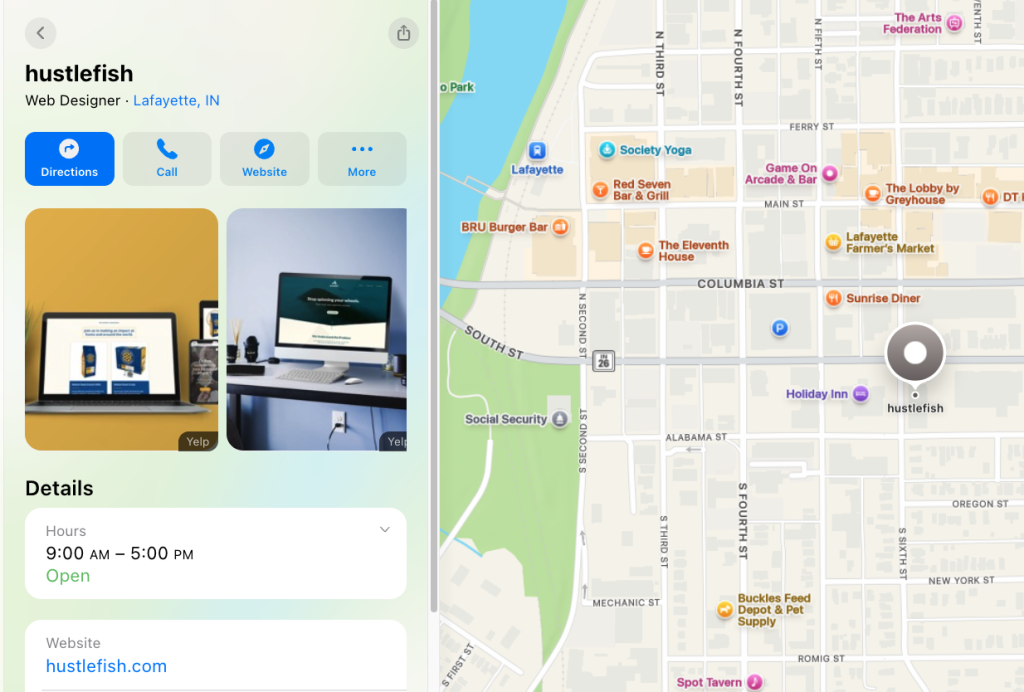
When someone taps your ad, they land on your place card, which is Apple Maps’ version of a business profile. A well-optimized place card includes:
- A cover photo
- Your logo
- Photos of your business (at least five; you can add up to 100)
- Custom actions such as directions, call, or a website, plus one customizable CTA like “Book a Consultation,” “Request a Quote,” or an app download
That last one is easy to overlook, but worth paying attention to. Most local business ads send people to their website’s homepage, but a custom CTA lets you send someone directly to a booking page, a contact form, or wherever they’re most likely to convert.
One thing worth flagging: if you haven’t uploaded your own photos to Apple Business, Maps will pull images from Yelp. If you don’t like what Yelp has, make sure you get your own photos in there before ads launch.
Are Apple Map Ads Worth It for Your Business?
A few questions worth asking before you jump in:
Is your Apple Business listing claimed and optimized? Claimed businesses get 30% more views on Apple Maps according to Apple’s own data. If your listing isn’t claimed yet, that’s step one regardless of whether you run ads.
Do your customers use iPhones? If most of your customer base is on Android, this platform reaches a smaller slice of your audience. For most Indiana businesses, that’s probably not the case — iPhone market share in the US sits well above 50%.
Are you trying to drive foot traffic or local leads? Apple Maps ads are built for exactly that use case. If you’re primarily an e-commerce business with no local component, this probably isn’t your highest-leverage ad spend.
If you answered yes, getting in early makes sense. New ad platforms tend to be cheaper and less competitive before everyone figures out they work.
Do You Need an Agency to Run Apple Maps Ads For You?
No. Apple built this platform to be self-serve. There is no minimum spend, no agency requirement, and the onboarding flow is straightforward enough that a business owner can go from signup to a live campaign in one sitting.
Here’s what self-serve actually looks like in practice:
- Setup: connect your existing Apple Business listing, choose your placements (Suggested Places, keyword search results, or both), and set a budget
- Budget control: there’s no set minimum, so you can start with a small test budget and scale up once you see results
- Targeting: you pick the keywords and categories that trigger your ad, similar to how Google Ads keyword targeting works
So when does DIY make sense? If you’re comfortable reading performance data and adjusting bids or keywords on your own, self-serve gets you live fast with no added cost. Where it gets harder is once you’re running Apple Maps ads alongside Google Ads, social, and everything else. Having someone managing all of it together tends to catch things a single-platform view misses, like budget overlap or messaging that doesn’t match across channels.
Get Started on Apple Maps Before Everyone Else Does
If you want to beat your competitors to Apple Maps Ads, the first step is making sure your listing is claimed and your place card is in good shape. If you’d rather have someone handle your campaigns and ad optimization, we’re here to help!
Frequently Asked Questions About Apple Maps Ads
Is there a minimum budget to advertise on Apple Maps?
No. Apple Maps ads have no minimum spend requirement, so you can start small and scale up once you see how a campaign performs.
How much does it cost to run ads on Apple Maps?
Apple hasn’t published a standard rate card, and costs will likely vary by keyword, geography, and time of day. Right now, there’s a live promo offering a 15% credit (up to $1,000 a month) for businesses that book by credit card by October 11, 2026.
How do I track how many people tapped my Apple Maps ad?
Reporting covers direction requests, phone calls, website taps, and tracking numbers for call attribution — enough to see whether your ad actually drove someone to act.
Is the self-serve setup process for Apple Maps ads simple?
Yes, relative to most ad platforms. Business owners can launch a campaign directly without needing outside help, but having someone experienced manage it still tends to get better results.
Can a small business advertise on Apple Maps without an agency?
Yes. Apple Maps ads are fully self-service, so any business can set up and run a campaign.
Why should a business advertise on Apple Maps?
Apple Maps reaches an audience that isn’t fully reachable through other platforms: iPhone users who default to Apple Maps over Google Maps. Apple also reports over 1 billion monthly business searches, with 1 in 2 searches leading to some kind of action.
Has anything changed about how business listings appear on Apple Maps?
Yes. As of July 14, 2026, Apple doesn’t allow ads for home service businesses (like plumbing, electrical, etc.), financial and high-risk services, and ads that feature political, harmful, or deceptive content.